I left my site early and headed south. It was mostly A roads so it was a bit slow, and by the time I got to Izmir the temperature was around 38. It was hotter than Satan’s bathwater… In Izmir I called into a Decathlon and bought a new cooking stove and gas bottles because my petrol stove had died and I had to throw my petrol stove away. If I can’t use it there’s no point in carrying it with me. It was nice and cool in Decathlon, which I appreciated, and with a quick purchase made I was soon on the road. At one point I stopped for fuel and decided to buy a bottle of cold water and an ice cream. I bought something called a ‘Nogger’ and I thought I’d died and gone to heaven. It was chocolate ice cream sandwiched between two rectangular digestive biscuits. Absolutely delicious…!
I headed for Selçuk, which is about 80km south of Izmir but when I got there the campsite was no more. So, plan B was going to a more expensive campsite in Kuşadası. It took me a while to find it as it’s on a one-way system and I kept missing it – but I found it eventually. Onder Camp Kuşadası is really expensive at 20eu a night, especially as it’s a very basic campsite. But it’s July and the town is a holiday resort so I suppose that’s why it’s expensive. It was around 400km from Troy, so it was another big jump, but I’m looking forward to being here because I am going to visit the ancient city of Ephesus (Efes).
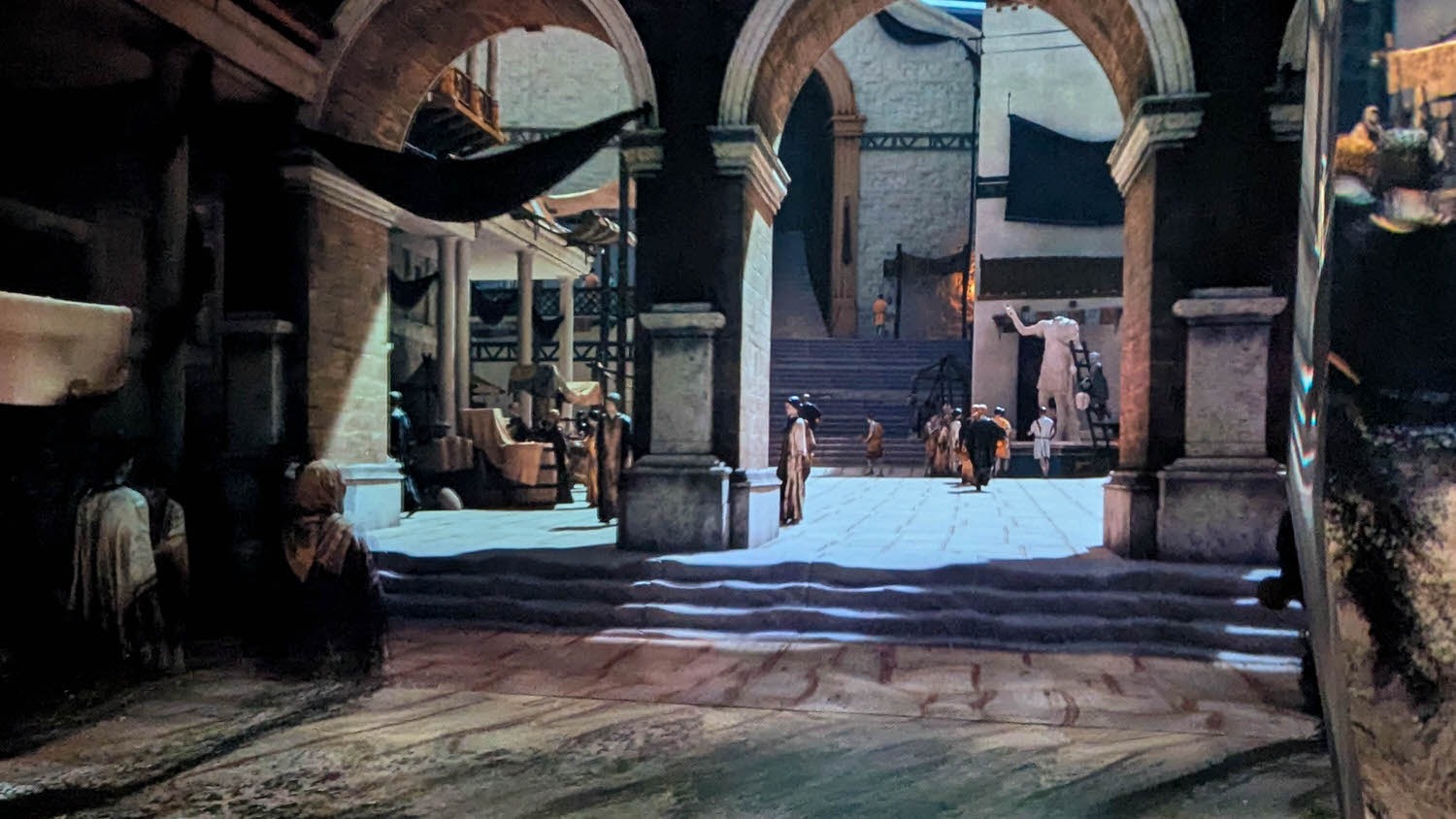
Ephesesus, or Efes as the Turkish call it, was a huge city during ancient times. Located in a valley south of Secuk, it was one of the main cities to visit in this part of Turkey for commerce and learning. There was a 2km road from the harbour to the city, and half-way there was a small lagoon. The road from the harbour was lined with covered walkways, houses and shops which led you straight into the main square of the city. In ancient times, one of the first things you would have seen when entering the main square was one of the biggest amphitheatres of its time. In ancient times the sight of this must have been captivating.
Ephesus was established around 3BC, and besides a huge amphitheatre that could hold around 24 thousand people for music, theatre and Gladiatorial displays, there was also a smaller amphitheatre holding around 2 thousand people. This was used for public meetings and also theatre. Nearby there were public baths, latrines and the impressive Library of Celcius, which was a two storey high building with a façade of marble columns, engravings and statues.
One aspect that actually surprised me was that the city also had sewers. Even in 3BC. Beneath the main roads were sewers that were covered by the huge stone slabs that made up the road. There was also a water distribution system that fed the public baths, latrines and water fountains, with the pipework made either of terracotta pipes or granite blocks with a hole cut through the centre – which even had flanges to join the blocks together. Amazing.
On the outskirts of the ancient city is a large oval gymnasium with tiered seating where Gladiators trained and fought, together with a large public baths. Around 300AD a large Christian basilica was built and for 300 years it became a religious centre. The city thrived for many years, but around 350AD the lagoon started to dry out so trade started to dwindle. Then in about 610 AD there was a colossal earthquake which devastated the whole region and unfortunately led to the demise of Efes and many other ancient cities in Turkey. Unbelievably, the site was only discovered in 1961, and although most of it has been opened-up, the archaeologists are still discovering more.
Nearby is the the town of Selçuk. Just outside the town is a large fort high on a hill. The fort was closed but nearby is the ancient Basilica of Saint John. It was only 5eu to visit and the view over the hills towards Efes is spectacular, especially as there are lots of trees and as you sit in the shade on the old walls you can enjoy the cool breeze and enjoy the view. In the remains of the old basilica there is a part of an old chapel which still has its original wall murals dating back to Roman times.