I was going to head for Innsbruck and then over the Alps heading for Bolzano, as I wanted to ride the Stelvio Pass again, but looking on the webcam for the Stelvio Pass it’s closed at the moment due to snow, so I may have to head for Switzerland or Slovakia to get to Italy. I’m here for a few days so I’ll see how the weather progresses. BTW, the weather here has gone quite overcast, with some rain and the temperature has dropped. Good job I had my thermals with me…
After leaving Frankfurt I headed south west into France and to SELESTAT, which is about halfway between Strasbourg and Basel. It wasn’t a big ride, about 260kms, and only took a couple of hours. I tried to stay off the autobahn, but this part of Germany is quite flat and geared for agriculture, so as the landscape was a bit uninspiring, about half-way I got back on the autobahn and gave it warp-factor 6.
Arriving just south of Selestat, I camped at a community campsite, Camping Les Cigognes. It’s 14eu a night and the toilets and showers are excellent. There is a creperie in the evening, and in the morning there is a baker with a selection of the most wonderful croissants, pastries and fresh bread. On the first morning I had a Danish which was stuffed with apple sauce and raisins. It was so good I had to buy another before I left the campsite. Bliss…
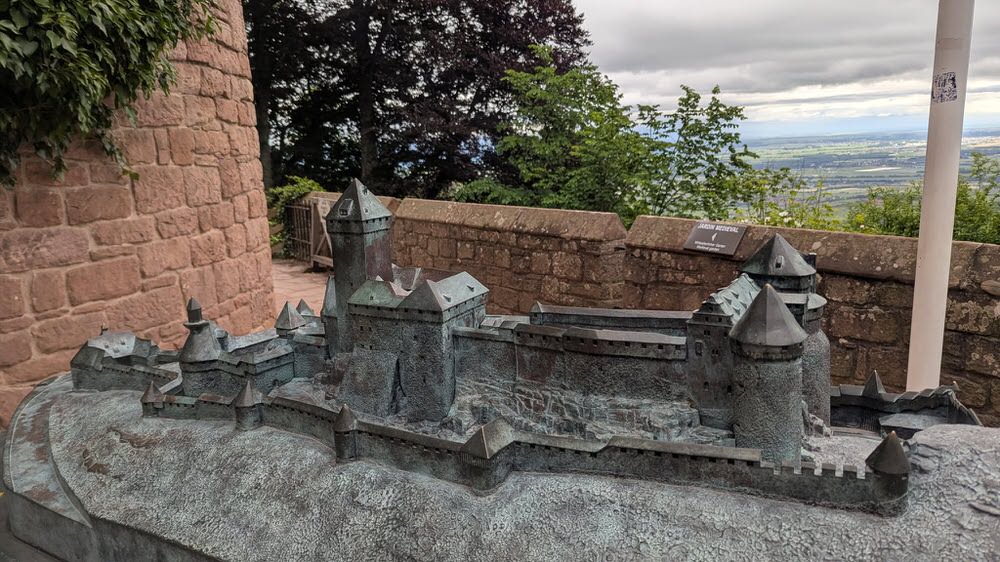
After a quiet but wet night, the rain stopped about mid-morning which meant I could get out and about. The first stop was Château du Haut-Kœnigsbourg. This is a superb 900 year old castle is built of sandstone and sits high on top of a small mountain. It was built around 1150, and was based on German rather than French castle design. The castle was modified and enlarged during the 1300 and 1500’s to make an impressive and impregnable castle that guarded and overlooked the nearby flatlands and the precious salt-trade route. During the 30 year war, it was surrounded and laid siege by the Swedish Army – who eventually set fire to the castle in 1634, which led to it’s demise.
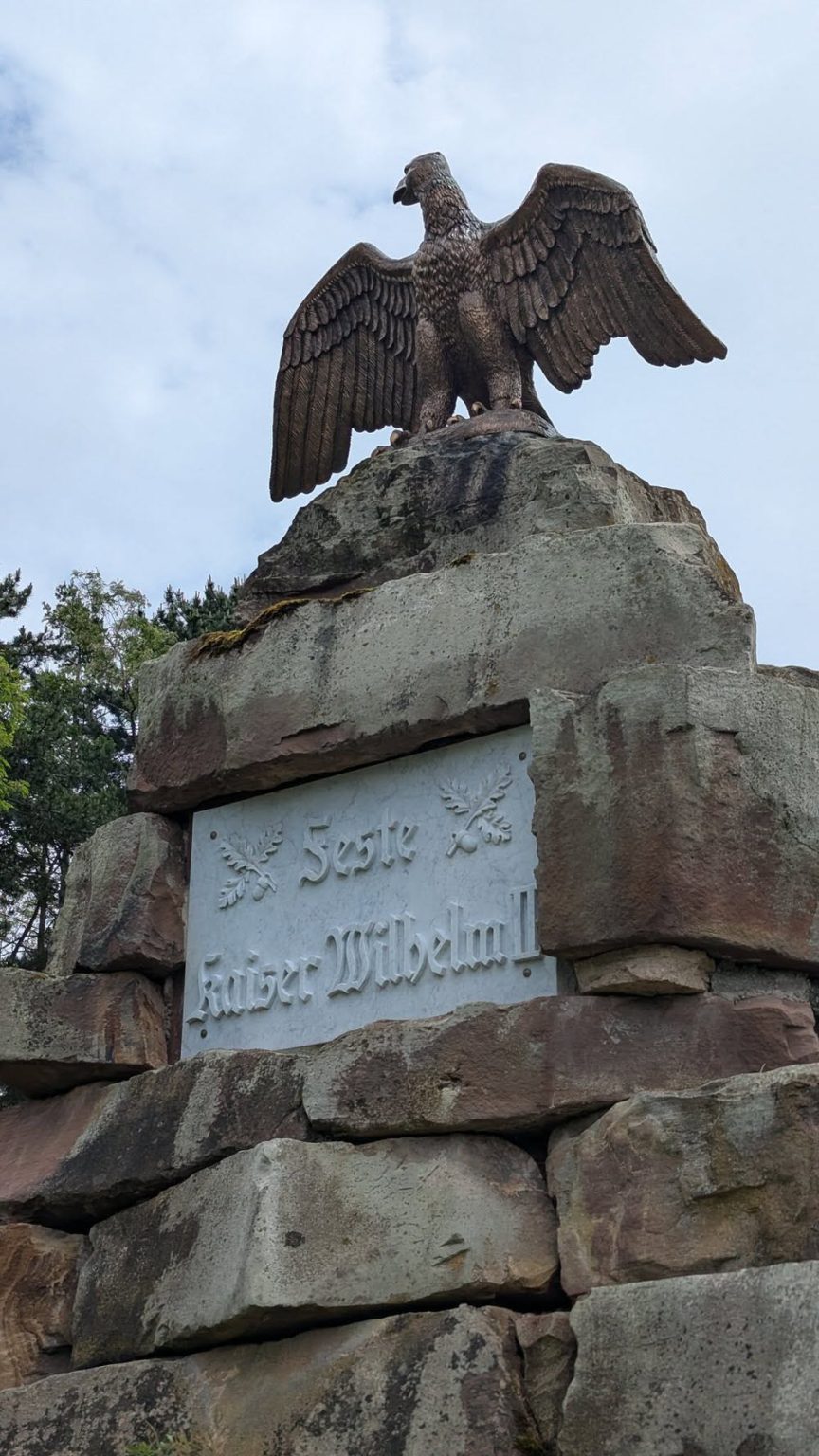
After falling into ruin for hundreds of years, it was Kaiser Wilhelm who ordered that this castle should be restored to its former glory. Work commenced in 1900 and it took 8 years to complete – and the castle now stands as it was before it’s demise four hundred years ago.
The next stop was at Fort Mutzig. This part of France – the Alsace – was part of Germany before WW1, and starting around 1893 the Army built this large fort, which took around ten years to build. The fort is colossal, and it was all built by hand, even building a railway to the site to bring materials. Mostly underground, except for the gun batteries, it covers a huge area on top of a series of hills. Overlooking France, it was established to stop any French advance into the Alsace. It was also built to be self contained and besides having vast stores for food and water, it also had air conditioning and was the first fort of this type to be lit by electricity, powered by four diesel engines.
As it transpired, it never saw any proper action, either in WW1 or WW2. The only action it saw was at the start of WW2 when it was taken over by the German Army but the Luftwaffe didn’t know and bombed it. Also, at the end of WW2, some German soldiers barricaded themselves inside, so the US Army packed a truck with explosive and blew up where they were barricaded, damaging a small part of the fort and making the soldiers surrender.
Tomorrow it’s back in the saddle and back into southern Germany. More castles, I’m afraid…